
Goldberg Variations, BWV988
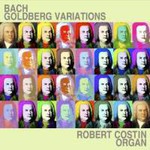 $30.00
Out of Stock
$30.00
Out of Stock6+ weeks add to cart
J. S. BACH
Goldberg Variations, BWV988
Robert Costin (organ)
[ Stone / CD ]
Release Date: Monday 29 July 2013
This item is currently out of stock. It may take 6 or more weeks to obtain from when you place your order as this is a specialist product.
Bach's 1741 masterpiece played on the Organ of Pembroke College, Cambridge (dating from 1708).
Performed by international organ recitalist Robert Costin.
A thrillingly exuberant recording played on an authentic instrument.
Booklet includes detailed notes by the artist.
Album review:
*5 STARS*
Though nowadays played on all manner of instruments, from harp to accordion, the Goldberg Variations was originally written for harpsichord. However, hearing this masterful performance by Robert Costin on the Pembroke College organ, it's impossible to imagine that Bach, an accomplished organist, didn't compose it on such an instrument. Right from the wistful charm of the opening "Aria", the organ's timbre is a model of acoustical grace, a perfect union of instrument and space, and as Costin launches into the Variations, its full majesty is revealed in rich, satisfying sonorities that build to an epic climax with the "Variatio 30 -Quodlibet". A marvellous, engrossing performance by a true master.
Andy Gill, The Independent, 2nd August 2013
J S Bach: Goldberg Variations BWV 988
*5 STARS*
This is a remarkably successful record. Bach's Goldberg Variations were composed for an instrument with two manuals, but is nowadays almost always heard played on a modern concert grand piano which of necessity means alterations to Bach's keyboard layout. Not that Bach would have minded, but the organ - especially the delightful small instrument of Pembroke College, which one is sure had Bach been able to hear this recording would have earned enthusiastic endorsement. As with some of the '48', I am certain that Bach played some of those pieces on the organ (the sustaining pedal in the strettos of certain fugues gives that particular game away) and I am equally certain that it is more than likely that either he or one of his sons played the Goldberg Variations on an instrument not a million miles removed in timbre from such as we have here. It is certainly more authentic than a grand piano, and one must also bear in mind that the harpsichord was not a sacred instrument at all - in Lutheran churches, it was effectively banned, and only permitted on such occasions as when a failure of the organ would mean no accompaniment during services. So if you wish to play the Goldberg Variations in a church, only an organ approaches authenticity, so no-one need feel discomfited by hearing the music on an organ. What they might feel somewhat discomfited about is that their instrumentalist may not be as fine as Robert Costin, whose approach to this masterpiece is wholly admirable. The clarity of his playing is admirable, as is the recording quality. All in all, a fascinating and, in its way, important release.
Robert Matthew-Walker, The Organ Magazine, August - October 2013
According to Johann Forkel, Bach's first biographer, the Goldberg Variations were written in response to a commission from the Russian ambassador to the electoral court of Saxony, Count Kaiserling, who often stopped in Leipzig. On one trip he brought along his young harpsichordist, Johann Gottlieb Goldberg, so that he could study with Bach. The Count said he had insomnia and needed music to be played when he stayed awake at night. Evidently the nobleman was quite pleased with the pieces Bach wrote for him because he gave the composer a golden goblet filled with 100 Louis d'or . Currently, the approximate value of the gold in the coins would be just under $32,000. Although the variations were written for harpsichord, organists play them as well. On this recording British organist Robert Costain, a graduate of the University of Cambridge, plays them brilliantly on the Pembroke College Organ. The organ was originally built by Charles Quarles in 1708 and has been enlarged and rebuilt many times. In 1980, N. P. Mander Ltd. reconstructed it in order to recreate a late 17th- or early 18th-century English instrument. From the recorded sound of Costin's playing the Goldberg Variations on this organ, they did an excellent job. The Goldberg s, BWV 988, which consists of an aria and 30 variations, was first published in 1741. The variations are derived from the bass line of the aria. Every third variation is a canon except at the end, where the last one is replaced by a quodlibet. Other types of variations are heard between the canons, including Baroque dances, a fughetta, a French overture, some ornate arias, and quite a few lively arabesques. Three variations are in G Minor; the rest are in G Major. At the end of the 30 variations, Bach wrote "Aria da Capo e fine," asking the performer to return to the beginning and play the aria again before concluding the performance.
At the beginning, Costin plays the aria softly with studied detail, letting Pembroke's acoustics waft the sound to our ears. Then he cuts loose and lets the catchy rhythm of the first variation bound across to us. Each of Bach's variations is unique, and Costin plays all of them with a wide range of tempos, musical color, and dynamics. In the slower variations, we can let the cool, green, and violet tones of this historic organ cleanse our aural palates before we listen to the more highly decorated variations at which Costin also excels. There are several comparable recordings, the latest of which was released in 2010 on JAV Recordings by Stephen Tharp, who plays the Fritts Organ at St. Joseph's Cathedral in Columbus, Ohio. His technique is excellent and his tone colors varied, but his performance is only easily available on MP3 at the moment. Jean Gillou made an excellent recording for Dorian that was released in 1988, but the sound is not up to date and he does not play all the repeats. Elena Barshai recorded it for Brilliant Classics in 2007 on the Organ of St Peter and Paul's church in Vilmergen, Switzerland. Her playing is expressive but she does not seem to have as great a variety of tone color as Costin. I really enjoyed the Stone Records disc and I think our readers will as well.
Fanfare
