
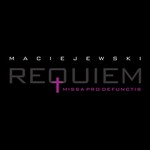
Maciejewski: Requiem - Missa Pro Defunctis.
 $50.00
Low Stock
add to cart
$50.00
Low Stock
add to cart
ROMAN MACIEJEWSKI
Maciejewski: Requiem - Missa Pro Defunctis.
Zdzislawa Donat (sop), Jadwiga Rappe (alto), Jerz Knetig (ten) & Janusz Niziolek (bass) / Warsaw Philharmonic Symphony Orchestra and Choir, Tadeusz St
[ Warner Classics / 2 CD ]
Release Date: Sunday 1 April 2018
This item is only available to us via Special Import.
Maciejewski consciously set out to write a monumental work which, as he observed, will have the chance to fill an important gap in Polish musical history, which totally lacks large-scale compositions for choir and orchestra.
His Requiem not only 'fills the gap' in the catalogue of Polish Requiem masses, but is also one of the world's most outstanding compositions in this genre. With World War II coming to an end, Maciejewski set out to compose a work which would make people realise the tragic absurdity of wars. Evil, he believed, comes from ignorance, the lack of knowledge of the Good. He considered ignorance as the first and main obstacle to human evolution, which he conceived as psychophysical and spiritual growth in harmony with nature, other men, and God. War was for him an extreme example of the degeneration of human values, and he called it a moral limbo, annihilating good relations between people. These broken ties could be restored, he claimed, only through forgiveness and peace.
He began his work on this composition most probably in January 1945, after his second digestive tract surgery. (…) Writing the Requiem, he also wished to pay his debt of gratitude to the Creator, to make a "votive offering in music" for his recovery. He was convinced that in this way he was pursuing his vocation and obeying the will of God. His internal transformation, in combination with his outstanding musicianship as a composer, allowed him to feel the freedom and joy of creating ad gloriam Dei.
Note: The cover may differ from that shown
"It's intermittently impressive in spite of the fact that the composer's personal voice is somewhat elusive…The performance is gently persuasive: the Warsaw Philharmonic Choir and Orchestra sing and play with a restrained feeling that suits the music beautifully, and the soloists-notably Jadwiga Rappe and Jerzy Knetig-all find just the right level of expression." Gramophone
Tracks:
Oratio
Introductio
Introitus
Kyrie
Graduale
Tractus
Dies Irae
